You can buy the best cot, set up the best child seat, and childproof every cupboard, yet the most important safety tool in a home with kids fits in your head and hands. Understanding what to do in the first two mins of an emergency can make the difference between a scare and a catastrophe. That is why a top professional CPR first aid courses quality first aid course customized for moms and dads rests high up on the list of must-haves, appropriate together with sleep, snacks, and a reliable stroller.
Parents that complete first aid training are not just memorizing steps. They are constructing muscular tissue memory under anxiety, a sense of percentage concerning when to watch and when to act, and the capability to keep calm voices around little ears. I have educated and went to first aid and CPR courses for more than a decade, and one of the most common responses from moms and dads is not concerning passing an examination or obtaining a first aid certificate. It is about feeling present when something goes wrong and moving with purpose rather than panic.
The fact in your home: what really happens
Children do not get hurt in neat book ways. The kid who refuses to sit still at lunch can choke on a bite of apple. The curious young child may touch a hot pan in spite of yesterday's caution. A six-year-old who has actually never ever had wheeze prior to can suddenly cough and struggle to take a breath after a bee sting in the yard. Falls from sofas, toxin sips from cosmetic bottles, head knocks on coffee tables, and fevers that spike at 3 a.m. fill the time between well gos to and birthday celebration parties.
A reputable first aid and CPR course prepares you for these regular emergency situations. Not with scare techniques, yet with rehearsed activities: exactly how to get rid of a respiratory tract for a baby versus a youngster, just how to make use of an auto-injector for anaphylaxis, just how to splint a limb up until you get to care, and when to call for aid initially as opposed to beginning interventions. Good training folds your home reality right into the educational program. If your kid has bronchial asthma, you practice spacer strategy and crisis application. If you have a swimming pool, you drill water rescue security and pediatric CPR up until your arms ache.
How parents find out best
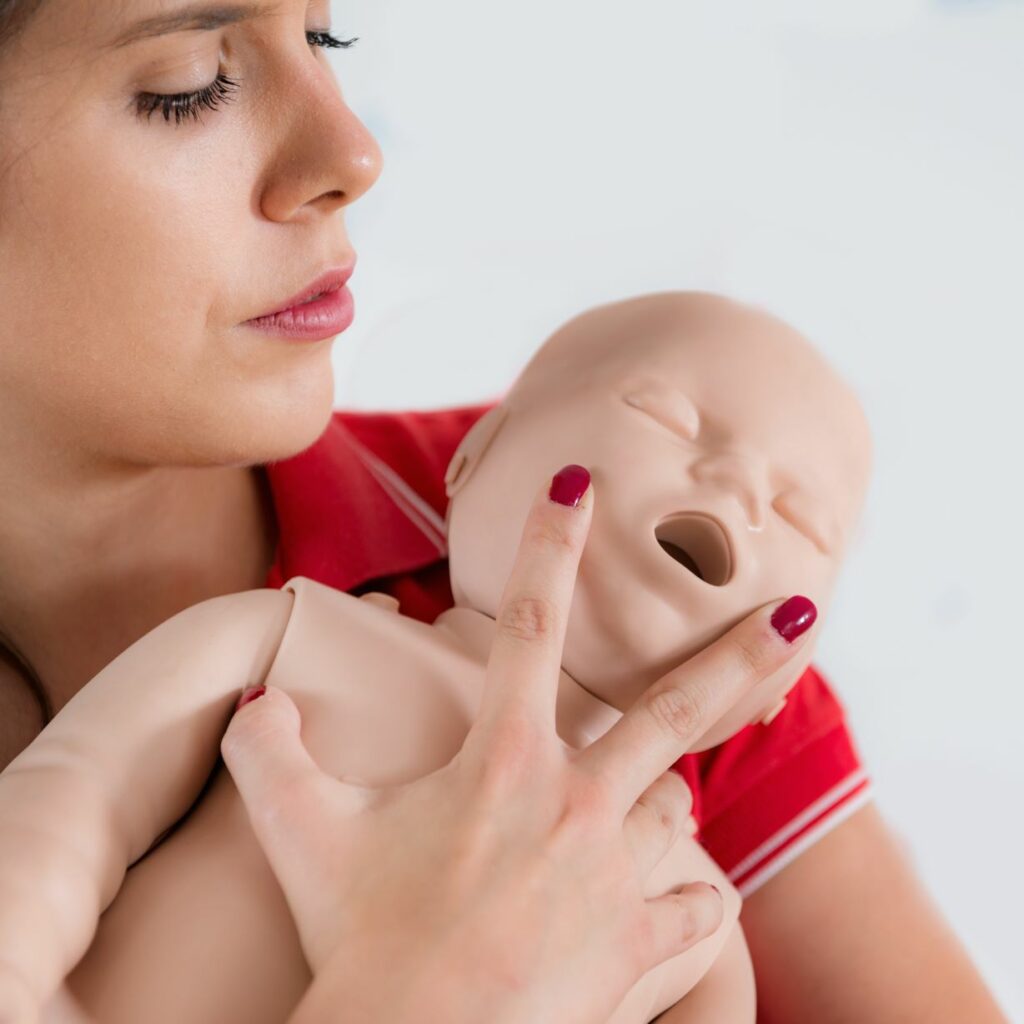
Adults learn in a different way from young adults enduring an institution demand. Parents come to a program with memories of prior close telephone calls and a healthy stress and anxiety concerning the following one. The very best first aid courses meet that energy with sensible circumstances and clear thresholds for activity. Hands-on beats slideshow every single time. You will not remember a representation while your child reddens at the high chair. You will certainly remember the feel of the manikin under your hands as you practice breast compressions throughout CPR training, and the sight line right into a model respiratory tract as you learn to deliver back blows and upper body thrusts for infants.

Look for teachers who invite your inquiries and do not dismiss edge situations. If a person asks, "What if my kid is on the spectrum and despises being touched?", the trainer should assist adjust your technique. If you ask whether you can execute CPR with a child in a child seat after an accident, the teacher needs to walk through risk and technique, not hand-wave it away. A quality service provider, whether a neighborhood community team or a nationwide organization like First Aid Pro or a Red Cross associate, educates concepts you can flex to your situations, not rigid scripts.
What a strong pediatric first aid course covers
Courses vary, however the core ability for moms and dads ought to really feel consistent and layered. Begin with scene safety and security. A parent that hurries into a roadway to save a youngster without very first stopping website traffic becomes a 2nd individual. Then move right into action checks, air passage management, and breathing support. Pediatric makeup issues right here. A baby's head is proportionally larger, the airway is smaller sized, and the breast compresses in a different way than a grownup's. You find out to check responsiveness, phone call for help efficiently, and start treatment without delay.
Choking monitoring deserves heavy rep. For infants under one year, that suggests back blows and breast thrusts on a company surface. For older kids, abdominal drives if they are aware and unable to cough, or upper body compressions if they end up being less competent. Technique up until you can shift smoothly between those methods based upon age and condition. The distinction is not academic. I enjoyed a father freeze at an outing when his nine-month-old gagged on banana. His partner had simply taken a first aid course and began back blows with consistent confidence. The food gotten rid of by the 3rd impact. They both shook later, yet the skill existed when it counted.
Breathing emergency situations generally fall into 3 patterns in your home: asthma flares, allergic reactions, and near-drowning. Training covers spacer technique for inhalers, the indicators of a severe asthma attack that needs immediate care, and exactly how to maintain a youngster in a setting that alleviates breathing instead of lying them flat. With allergic reactions, you find out to identify anaphylaxis even when hives are lacking. The policy is simple: breathing or blood circulation signs and symptoms with a most likely trigger amounts to epinephrine currently, not after the 2nd sign. Practice with instructor auto-injectors up until you can get rid of safety and first aid Gympie security caps, location properly against the thigh via apparel, and hold for the full count. With water events, the focus is on safety and security initially, getting rid of the child from the water without risking on your own, and after that instant CPR if there is no breathing.
Bleeding control is simple with the right habits. Straight pressure defeats sophisticated bandaging. Learn to pack an injury with clean fabric or gauze, apply consistent stress for minutes, not seconds, and boost if useful. Nosebleeds go forward, not back, with pinching of the soft nostrils for at https://milordzy484.cavandoragh.org/cpr-on-newborns-one-of-a-kind-strategies-every-parent-should-know least 10 mins. The temptation to peek every min resets the clock. For burns, the mantra is great the shed, warm the kid. Use cool running water for a minimum of twenty minutes for anything greater than a little surface burn. Miss ice. Keep the rest of the child cozy, cover freely with stick film or a clean fabric, and do not pop blisters.
Head injuries are entitled to judgment. Not every bump needs a hospital visit, yet specific indications do. You will discover to expect loss of consciousness, consistent throwing up, aggravating headache, complication, uncommon behavior, or seizure task. With infants under one year, the limit for assessment is lower. If an autumn is from more than the kid's height, or the device really feels violent to you, trust fund that feeling and have a clinician evaluate them. A good first aid and CPR course teaches these decision factors without making you really feel negligent if you choose to look for care.
Poisoning and consumption management have transformed gradually. The majority of us matured hearing "induce vomiting." Modern support states do not. Call a toxin information center first, bring the item or a photo of the label, and follow directions. Activated charcoal is not a do it yourself repair for moms and dads. Keep the poisonous substance hotline saved in your phone and adhered to your refrigerator. If you have grandparents or sitters that assist, see to it they have the number too.
Finally, CPR and AED use are the support of any kind of first aid and CPR course. For infants, compressions with two fingers to one-third the breast deepness at about 100 to 120 per min, with breaths that make the breast surge carefully. For children, make use of a couple of hands based on dimension. Automated external defibrillators can be utilized on children with pediatric pads if readily available, and on infants if that is all you have in a real emergency. The device gives you motivates. You bring the guts to start.
Picking the appropriate service provider and format
Not all first aid courses are produced equal. Some are built for office conformity and skim over pediatric scenarios. Others are superb at grown-up medical emergencies however only tack on baby topics at the end. If you are a moms and dad or caregiver, pick a program marketed clearly as pediatric or household first aid, or a first aid and CPR course with a kid and infant track. Check out the syllabus, not just the logo. It ought to note infant CPR, youngster CPR, choking for both age, anaphylaxis, asthma, burns, blood loss, head injuries, and poisoning. Additionals like high temperature monitoring and seizures are useful, specifically if your kid has a history.
Instructor-to-student proportion issues. You want time on manikins, not a quick turn at the end while the following group views the clock. Ask how many manikins per course and just how much time is allocated to hands-on practice. If the response feels vague, move on. Companies like First Aid Pro and established area training groups usually publish this info and track quality with feedback. A credible clothing also keeps present standards and offers refresher course alternatives. Skills discolor. If your last cpr course was 3 years earlier, do not assume you will remember every action when adrenaline spikes.
Blended knowing gains its location for hectic moms and dads. You can take the academic portion online at your speed, after that participate in a focused in-person session for practical drills. That format works well if the hands-on element is long enough and led by a teacher that corrects technique. Entirely online courses without validation can be beneficial for recognition, yet they do not construct the responsive memory you need. When a baby is purple and quiet, your body requires to move before your mind completes a sentence.
Certification, refreshers, and genuine retention
A first aid certificate gives you a date-stamped record that you finished training to a specific standard. Employers, institutions, and volunteer companies use it as proof of capability. In your home, the paper is additional to the habit of rehearsal. Plan to take a cpr refresher course every 12 to 24 months, quicker if you underwent a scare or your family changed. New baby? New baby-sitter? New pool? Refresh.
You can keep abilities sharp in between courses. Some moms and dads establish a quarterly tip to run a two-minute drill: compressions on a cushion while passing over loud, simulated choking series with a teddy bear, EpiPen instructor method while reviewing a story. Transform it right into a tranquil routine, not a grim routine. The objective is comfort with the activities, not obsession with risk.
Adapting first aid to your child's needs
Textbook CPR rarely includes a wiggly toddler that dislikes lying flat or a child who startles at loud noises. That is the real world. If your child has sensory sensitivities, technique in a manner that values their limits. Usage company, predictable touch and stable voice. If loud checking intensifies them, tap a rhythm. If your youngster has a tracheostomy, a seizure condition, or a heart condition, ask your pediatrician to collaborate with your training supplier for tailored guidance. You want a strategy that mixes general first aid with the specifics of your kid's health.
Medication monitoring becomes part of first aid in your home. Keep fast-acting inhalers with spacers all set and unexpired. If you have an epinephrine auto-injector, shop 2 together and change prior to expiry. Label dosing sheets plainly. An organized moms and dad is not fussy. They are getting choice speed when seconds matter.

What emergencies seem like from the inside
Parents often ask, "Will I freeze?" Cold is a normal anxiety action. Training does not erase fear, it gives fear a path. I keep in mind a kitchen shed telephone call where a mommy had currently cooled her youngster's forearm under running water for several minutes by the time we arrived. She looked light, however every activity was clean. When I asked exactly how she stayed on track, she claimed she heard her instructor's voice: cool down the shed, warm the kid. She duplicated it to herself like a metronome while she covered a towel around her daughter's shoulders to maintain her from shuddering. That is what great first aid training plants in you, a few straightforward supports that hold under pressure.
Another daddy once messaged after a choking scare at brunch. His three-year-old coughed hard, after that went silent with vast eyes. The dad stood, supported him, and supplied 2 abdominal drives. The grape stood out. He cried tougher than the kid afterward. Training did not make him brave. It made him effective.
When to call for help, and just how to make that call count
Part of first aid is understanding your ceiling. If breathing is struggled, lips are blue, a seizure lasts greater than 5 mins, a child is unresponsive, or blood loss does not stop with direct stress, you call emergency solutions. In a cpr course you will practice the phone call script: that you are, where you are, what took place, and what you are doing currently. Put your precise address on a visible note near your home phone or kitchen center. In the scramble of a crisis, even familiar addresses can slip your mind.
When you call, put the phone on speaker and follow prompts. If you are alone with an infant who is not breathing, do 2 minutes of CPR before you call, after that leave the line open while you continue. If there are 2 adults, divided functions immediately, one calls while the other starts care. This choreography is an additional factor to train with your partner or normal caretaker. You can avoid yelling and replicate initiatives when it is real.
The home configuration that supports your skills
First help packages sold for households commonly consist of loads of tiny plasters and not nearly enough of the products you will in fact use under stress and anxiety. Construct or tune your very own. Focus on top quality adhesive bandages in child-friendly sizes, sterile gauze pads, a big roll of gauze, cohesive wrap, tape that sticks to skin without tearing, saline wash, tweezers with aligned pointers, tiny blunt scissors, instantaneous cold packs, a digital thermostat, dental syringes for dosing, and a couple of triangular plasters that double as slings. Maintain children's acetaminophen and advil with application graphes classified by weight. Add 2 pairs of nitrile handwear covers in a noticeable pocket. If you manage allergic reactions or asthma, consist of an extra spacer and an epinephrine instructor so sitters can rehearse.
Store sets where life occurs, not buried in a bed linen closet. One in the kitchen area, one in the vehicle, and a slimmer version in the baby stroller. Rotate stock twice a year. If that seems like a lot, connect it to daylight conserving clock adjustments. At the very same time, check smoke alarms, carbon monoxide gas detectors, and the condition of your pool fence or stairway gates.
Here is a brief, functional checklist worth printing and taping to the inside of a cupboard door:
- Emergency numbers: neighborhood emergency, toxin facility, pediatrician, closest immediate treatment, your address Medications: inhaler with spacer, epinephrine auto-injector, dosing chart by weight Kit essentials: gauze, natural cover, top quality bandages, saline, gloves, thermometer, tweezers Skills to revitalize quarterly: infant CPR compressions, kid choking series, EpiPen fitness instructor use Access and back-ups: tricks for caregivers, phone passcode sharing strategy, extra auto-injector location
Myths that waste time
A couple of persistent misconceptions surface in every first aid and cpr course for moms and dads. Learning to avoid them gets rid of mental mess when seconds tick.
Cold butter on burns remains as negative guidance. Fat catches warm, which deepens tissue injury. Stick with cool running water. An additional myth says you ought to fish out objects from a choking youngster's mouth with a blind finger move. That risks pressing the blockage deeper. Only eliminate what you can see and realize conveniently. Individuals still worry about beginning CPR because they may "damage a rib." In children, rib fractures from CPR are unusual, and your top priority is perfusing the brain. Compression depth matters more than the anxiety of a crack.
Parents frequently ask for an universal guideline to find concussion. There is no solitary sign. You search for a collection and a pattern that aggravates, not a single signs and symptom. Similarly, high temperature concern runs high. A number alone is not the whole story. Exactly how the youngster looks, beverages, urinates, and responds overviews the decision more than the peak analysis, unless the youngster is under three months or has certain clinical risks.
Training with each other alters outcomes
The house works as a group whether or not you call it. If only one grownup has actually taken a first aid and CPR course, the whole strategy depends upon their visibility. Spread the skill. Grandparents, sitters, older siblings, also close next-door neighbors who host your children for playdates can benefit from cpr courses and first aid training. Several suppliers use brief community sessions or family members workshops, some at weekend break times that fit around sports and snoozes. If you handle a moms and dad group, take into consideration inviting a trainer for a personalized session. The group vibrant aids shy learners technique and offers every person an usual language for emergencies.
After the emergency: debrief and reset
Even when everything works out, occasions leave a mark. A basic nosebleed that soaked a t-shirt can make a five-year-old avoid football for a week. A moms and dad may replay a choking scare for months. Talk it with in simple words. With kids, practice the repair as a tale you took care of with each other. With adults, stroll the steps you took and the ones you intend to boost. Replace utilized products the same day. If you used an epinephrine auto-injector or done CPR, connect with your doctor to examine what occurred and upgrade care plans.
Schedule a refresher earlier than intended after a major occasion. Your memory for the genuine case will develop your practice. Ask your trainer to run scenarios that mirror what you faced, consisting of the components that really felt disorderly. The goal is not to relive anxiety, yet to knit skill throughout that gap.
Where to begin today
If you have never taken a program, start with a credible pediatric first aid and cpr course that consists of infant and child components and concerns a first aid certificate identified in your area. Search for regional offerings by carriers such as First Aid Pro, community wellness organizations, or hospital-based education groups. Inquire about combined alternatives if you require flexibility. If you qualified years earlier, book a cpr refresher course and devote to hands-on practice. Then established your home atmosphere to match your skills, and share the strategy with any individual that cares for your child.
Parents do not need to become paramedics. You need a clear head, a few well-practiced activities, and the judgment to call for assistance early. That mix transforms regular homes right into safer areas for kids to expand, discover, and make the unavoidable errors of childhood with a much better safeguard under them.